

Steps for every product in the range
How to use Shadazzle
Each product in our range goes on its own way: the paste with a damp sponge, the bar with a wet brush, the restorer on a cloth, the laundry powder in a bottle of water. Find yours below and follow its steps to the end, because the last one is where a clean sink or table stays clean.
Which product goes on how
Your sink, your plates, your dining table and your laundry each get a different product, and each product has a different last step. Before you open a tub or a tin for the first time, find it in the table and read across the row.
| Product | How it goes on | Last step |
|---|---|---|
| Cleaner & Polish | A damp sponge rubbed on the paste until it foams | Rinse thoroughly, then wipe dry |
| Solid Dish Soap Bar | A wet brush or sponge rubbed across the bar | Rinse the dishes, let the bar dry |
| Natural Wood Restorer | A little on a cloth or cotton pad, rubbed over the wood | Wipe with a dry cloth, and again after 2 to 3 hours for a water stain |
| DIY Laundry Detergent | One sachet shaken with water into 1.8 liters | Measure each load by the directions on the pack |
| Nanofiber Cleaning Cloth | One cloth damp with water, wrung out | Go over it with the second cloth, dry |
| Cloth & Cleaner Set | The Lemon paste on its sponge | Rinse, then dry with a nanofiber cloth |
If the label on your product ever reads differently from this table, follow the label.
Cleaner & Polish: a damp sponge and a little foam
Lift the sponge off the paste and hold it under the tap, then squeeze it until it stops dripping. A sponge full of water turns the top of the paste to slurry, and you lose track of how much goes on. Rub the damp sponge over the paste with a few turns until it foams. That is enough for a sink, a stovetop or the base of a pan, and the label asks you to use the paste sparingly for that reason.
Move the foam over the surface with light pressure, one patch at a time. On brushed stainless steel, follow the fine lines of the finish with the sponge instead of scrubbing across them. Pressing harder does not clean faster. The clay does the work, and on a soft or bright finish the extra pressure is what you would see afterwards.
Rinse thoroughly with clean water, then dry the surface with a clean cloth while it is still wet. Paste left to dry on chrome or glass comes back as a thin white film, the residue the label warns about. Rinse the sponge, squeeze it out, sit it back on the paste and close the lid so the tub stays soft until next time.
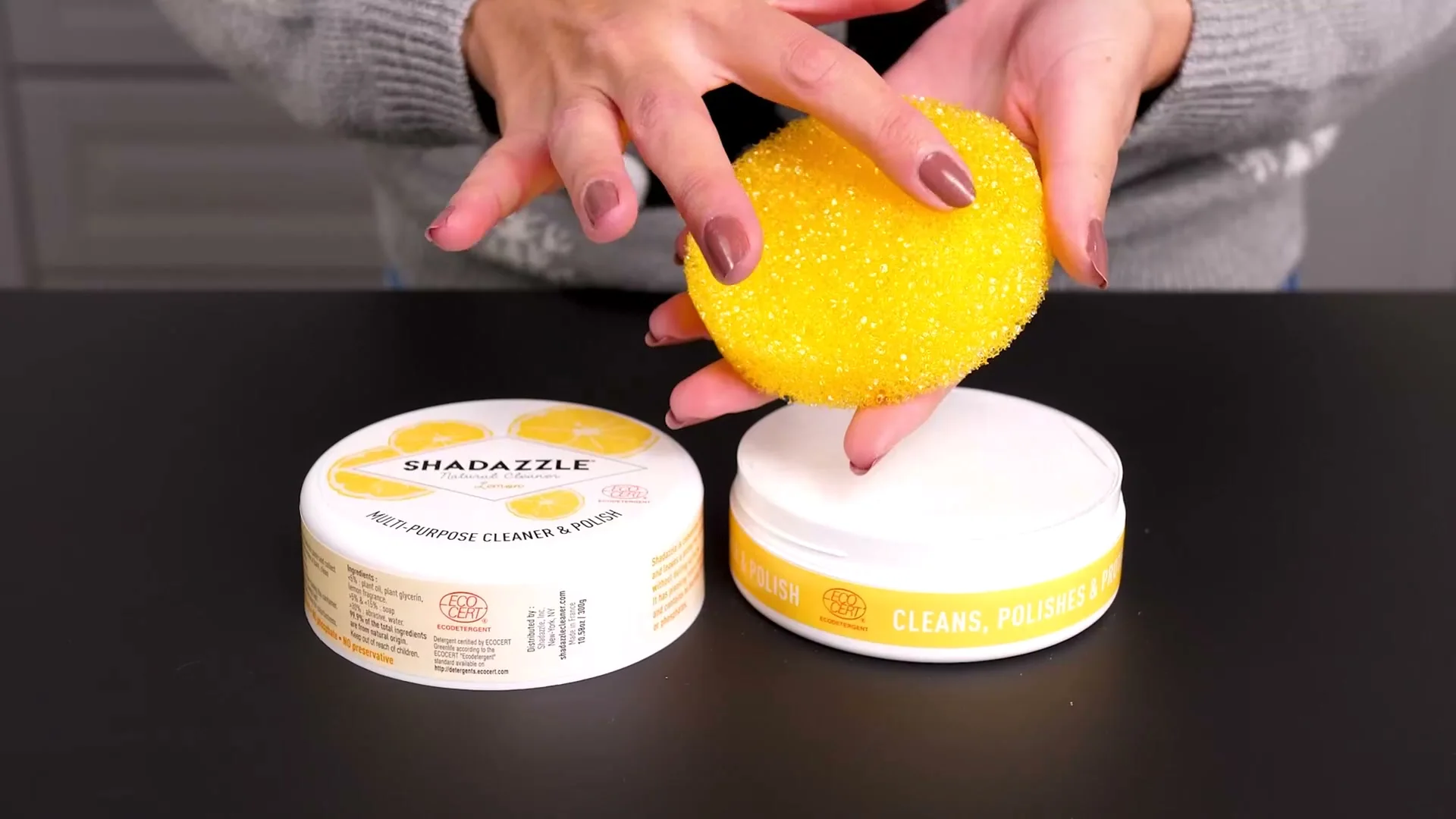
Before you try a new surface, look it up on where Shadazzle works. Brass, marble, natural stone and wood stay off the label, and a glass cooktop needs a look at its manual first.
Solid Dish Soap Bar: a wet brush and the bar
Wet your dish brush or sponge under warm water and rub it across the bar a few times. The lather on the bristles is your dish soap, so there is nothing to pour and no bottle to tip upside down when it runs low. Wash your plates, glasses and pans the way you always do, then rinse them well under the tap.
Between meals, the bar has to dry. Stand it on a soap dish with holes or on the edge of the drying rack, out of the splash from the faucet. A bar left in a puddle goes soft at the base and wears down faster than one that dries between washes. The three bars in a pack are cut by hand in the USA, so keep two in a dry cupboard while the first one does the work.
Keep the jobs apart at the sink. The bar is for what you eat and drink from. The paste is for the steel basin, the faucet and the outside of the pot.
Natural Wood Restorer: on the cloth, not on the wood
Pour a little of the restorer onto a soft cloth or a cotton pad, never straight onto the table. Rub it over the finished wood, then go over the same patch with a dry cloth. For a dusty bookshelf, a few drops on the cloth are enough. For a water stain, rub it in, leave it for two to three hours, and wipe the spot again.
Start where a mistake would not show: the back of a chair leg, the inside of a cabinet door, the underside of a shelf. The National Park Service, in its note on cleaning wood furniture, advises a test in a small, hidden area before any cleaning beyond dusting, and only on a finish that is sound and stable. If your finish is cracked, flaking or lifting, or the piece is painted, take it to a furniture restorer instead.
The restorer is made for finished and sealed wood: dining tables, chairs, cabinets, fitted kitchens and wood floors. Close the tin after each use and keep it with your other cleaners, out of children's reach. Once it is empty, the tin goes in the recycling.
DIY Laundry Detergent: one sachet, one bottle, 1.8 liters
Empty the sachet into a clean bottle, either the one sold with it or a bottle you keep for detergent and nothing else. Add water to make 1.8 liters, screw the cap on and shake until the powder has gone into the water. If your bottle once held a drink, label it in large letters. HRSA Poison Help asks you never to keep a cleaner in a cup or a drink bottle, and a juice bottle of blue liquid on a low shelf looks like juice to a toddler.
Dose each load by the directions on the pack, and turn to our ingredients page for why the amount you pour matters. One sachet is rated for up to 65 loads. Your own count will depend on the size of your loads and how carefully you measure.
Store the spare sachets and the mixed bottle on a high shelf or in a cabinet that closes. CPSC asks for exactly that for laundry products in a home with children: in their original containers, out of a child's sight and reach.
Nanofiber Cleaning Cloth: one damp, one dry
Wet one cloth, wring it out hard, and wipe your glasses, the phone screen, the bathroom mirror or the counter. Go over it straight away with the second cloth, dry. A pack holds two cloths so one can stay damp and the other dry, and the dry pass is the one that takes the streaks away.
On a phone or a laptop screen, switch the device off and wring the cloth until no water drips from it, so no water runs toward the edges of the glass. After a clean with the paste, the dry cloth is your last step on chrome and glass, and it leaves no lint on a bright surface.
Put the cloths through the washing machine when they look grubby. Our ingredients page has the washing advice for microfiber, which comes down to two things: wash them with other microfiber and leave out the bleach.
Storing and safety
Keep every cleaner in the container it came in, with its label on. Put the tub, the tin, the sachets and the dish bars up high or behind a door that small children and pets cannot open. CPSC advises a locked cabinet or box for cleaning supplies in a home with young children, and the original container, so the label stays with the product.
Use one product at a time and rinse the surface before you switch. Poison Control explains why: bleach mixed with an acid, such as vinegar or some toilet bowl cleaners, gives off chlorine gas, and bleach mixed with ammonia, a common ingredient in glass sprays, gives off chloramine. The EPA puts it as a plain rule, never to mix household care products unless the label tells you to. Our paste needs nothing on its sponge but tap water.
Open a window or switch on the fan while you clean, as the EPA advises for household products in general. If fumes reach you, leave the room and breathe fresh air. If someone swallows a cleaner or feels unwell after breathing one in, call Poison Help at 1-800-222-1222, which puts you through to your local poison center.
Every product in the Shadazzle lineup carries these steps with it, next to the button that opens it at our retail partner.
Ready to order
A brighter sink is one tub away
Every tub, bar, bottle and cloth in the Shadazzle lineup opens at our retail partner with one press of the button, in the scent or pack you choose there.

Checkout, delivery and returns happen with our retail partner. Prices are from our last update.